
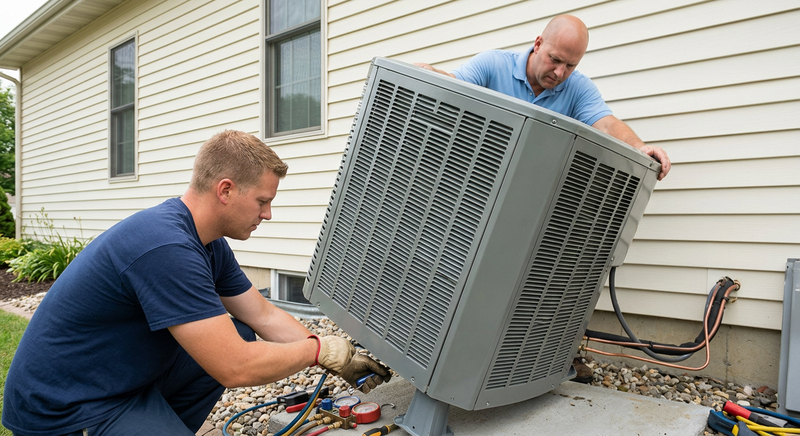
Deciding whether to repair or replace your air conditioning system is one of the most common and frustrating decisions homeowners face. When your AC starts struggling—especially as temperatures begin to rise—it is easy to default to a “quick” fix. But not every repair is worth making long-term. In the Inland Empire, where air conditioning systems are heavily relied on for extended periods of heat, making the right decision can impact your comfort, energy costs, and overall home efficiency for years to come.
How Old Is Your AC System—and Why It Matters
The age of your system is one of the biggest factors in determining whether repair or replacement makes more sense. Most air conditioning systems last around 10 years, depending on usage and maintenance. In the Inland Empire, where systems often run longer and harder due to consistent heat, that lifespan can lean toward the lower end if maintenance has been inconsistent.
As systems age, efficiency naturally declines, and internal components wear down. Even if a repair gets the system running again, older units are more likely to experience additional issues shortly after. If your system is approaching or past that 10–12 year range, repairs often become short-term solutions rather than long-term fixes.
When a Repair Actually Makes Sense
Not every AC issue means replacement. If your system is newer, well-maintained, and the issue is isolated—such as a capacitor, thermostat, or minor electrical component—repair is usually the smarter and more cost-effective choice.
Repairs also make sense when the system is still cooling efficiently overall, and the problem has not impacted long-term performance. The key is identifying whether the issue is a one-time fix or part of a pattern. A single repair on a healthy system is very different from repeated breakdowns over time.
Signs Your AC Is Becoming a Money Pit
One of the clearest indicators that it may be time to replace your AC is frequent repairs. If you are calling for service multiple times within a year or dealing with recurring issues, those costs start to add up quickly. At a certain point, continuing to repair the system becomes more expensive than replacing it.
Another sign is rising energy bills without a clear explanation. As systems lose efficiency, they run longer to maintain the same temperature, which increases energy usage. In the Inland Empire, where AC systems run for extended periods during summer, even small efficiency losses can significantly impact monthly costs.
How Inland Empire Heat Changes the Decision
In milder climates, homeowners may be able to stretch the life of an older system longer. In the Inland Empire, that is rarely the case. Extended heat waves and high temperatures put continuous strain on air conditioning systems, especially during peak summer months.
If your system is already struggling in spring or early summer, it is unlikely to hold up through prolonged heat. Waiting until it fails during peak season can leave you dealing with uncomfortable indoor temperatures and limited repair availability. In this region, reliability matters more than squeezing out a few extra months from an aging system.
Comfort Issues Are Often a Bigger Clue Than You Think
Many homeowners focus on whether the system turns on, but performance matters just as much. If your home has hot spots, takes too long to cool, or never quite reaches the temperature you set, your system may be losing its ability to perform effectively.
These issues are often tied to aging components, reduced airflow, or declining system capacity. While some of these problems can be repaired, they often signal that the system is no longer operating at a level that supports consistent comfort—especially during Inland Empire summers.
The Long-Term Value of Replacement
Replacing an AC system is a larger upfront investment, but it often provides long-term benefits that repairs cannot match. Newer systems are designed to be more energy efficient, which can lower monthly utility costs. They also provide more consistent cooling, improved airflow, and fewer unexpected breakdowns.
For homeowners in San Bernardino County, where cooling costs can add up quickly during the summer, improved efficiency alone can make a noticeable difference over time. More importantly, replacement provides peace of mind knowing your system can handle the demands of the season without constant concern.
A Simple Way to Think About the Decision
If your AC is newer, the issue is minor, and performance is still strong, repair is usually the right move. If your system is older, struggling to keep up, and requiring frequent attention, replacement is often the smarter long-term investment.
The goal is not just to get your AC running today—it is to ensure it will continue to perform reliably when you need it most. Give us a call at 909-297-1914 and we can help you make the right decision and save time, money, and frustration later.
