
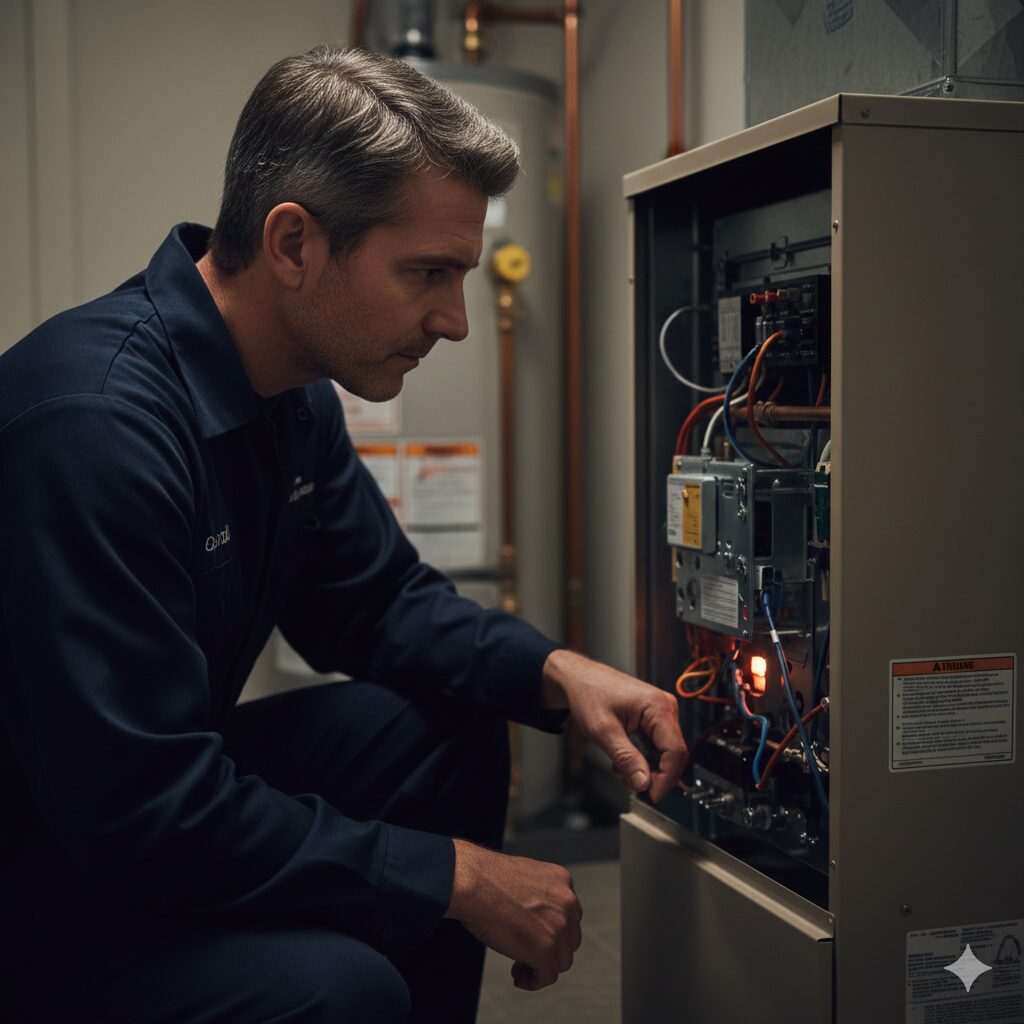
Why Heating Systems Fail Without Warning
Heating systems usually don’t go from “perfect” to “broken” overnight, even if it feels that way when you wake up to a cold house. Most failures are caused by small issues that build quietly over time—dust and debris restricting airflow, electrical connections loosening from vibration, sensors drifting out of calibration, or parts wearing down from repeated heating cycles. Then the first truly cold week hits, the system runs longer than it has in months, and those small issues finally surface as a shutdown, weak airflow, or inconsistent heating. Regular heating maintenance reduces the chances of that surprise failure because it catches wear and performance problems before the system is pushed to its limits.
Preventing Breakdowns During Peak Heating Season
When your heater is working hardest, it’s also when service appointments are hardest to get—and when a simple problem can turn into a multi-day headache. Maintenance is preventative: it’s designed to identify early signs of trouble like a stressed blower motor, failing igniter, worn belts, weak capacitors, dirty burners, clogged drainage lines (on some systems), or airflow restrictions that cause overheating. A well-maintained system cycles on and off properly, heats more evenly, and avoids the kind of strain that triggers safety shutdowns. Instead of discovering problems when the house is already cold, maintenance shifts you into a proactive position where issues are handled on your schedule, not during a seasonal rush.
How Maintenance Improves Energy Efficiency
Heating efficiency is not just about the model of your system—it’s about how well it’s operating in the real world. When filters are clogged, coils are dirty, burners are not firing cleanly, or airflow is restricted, your system has to run longer to reach the thermostat setting. Longer run times mean more energy use, more wear, and higher monthly bills. Maintenance helps restore the system to proper performance by addressing the common efficiency killers: dirty components, improper airflow, and minor mechanical problems that force the system to work harder than necessary. Over the course of a heating season, even small efficiency losses can add up, so maintenance becomes one of the simplest ways to keep operating costs from creeping upward.
Consistent Comfort Throughout the Home
A lot of homeowners assume uneven heating is just “how the house is,” but comfort problems are often linked to system performance. If some rooms are warm while others stay cold, the issue may be airflow-related—dirty filters, duct leakage, blocked vents, or a blower that isn’t moving air as it should. It can also be thermostat and cycling behavior: a system that short-cycles may heat the area near the thermostat quickly, shut off too soon, and leave the rest of the home under-heated. Maintenance helps identify these patterns and correct the underlying causes, which improves temperature balance and makes the home feel consistently comfortable instead of warm in one room and chilly in another.
When to Schedule Heating Maintenance
The best time to schedule heating maintenance is before the coldest stretch of the season—when you’re not already depending on the system daily and when you have time to address anything that’s found. Early-season maintenance is valuable because it gives you options: if a part needs replacement or a bigger issue is discovered, you can handle it proactively instead of scrambling during peak demand. Waiting until the first cold front hits can mean the system is already stressed, minor problems become major, and appointments are harder to secure. From a homeowner standpoint, the ideal scenario is simple: confirm everything is operating safely and efficiently before you truly need it, not after. To do that, give Ballard a call at 909-297-1914 to schedule your heating maintenance today!
